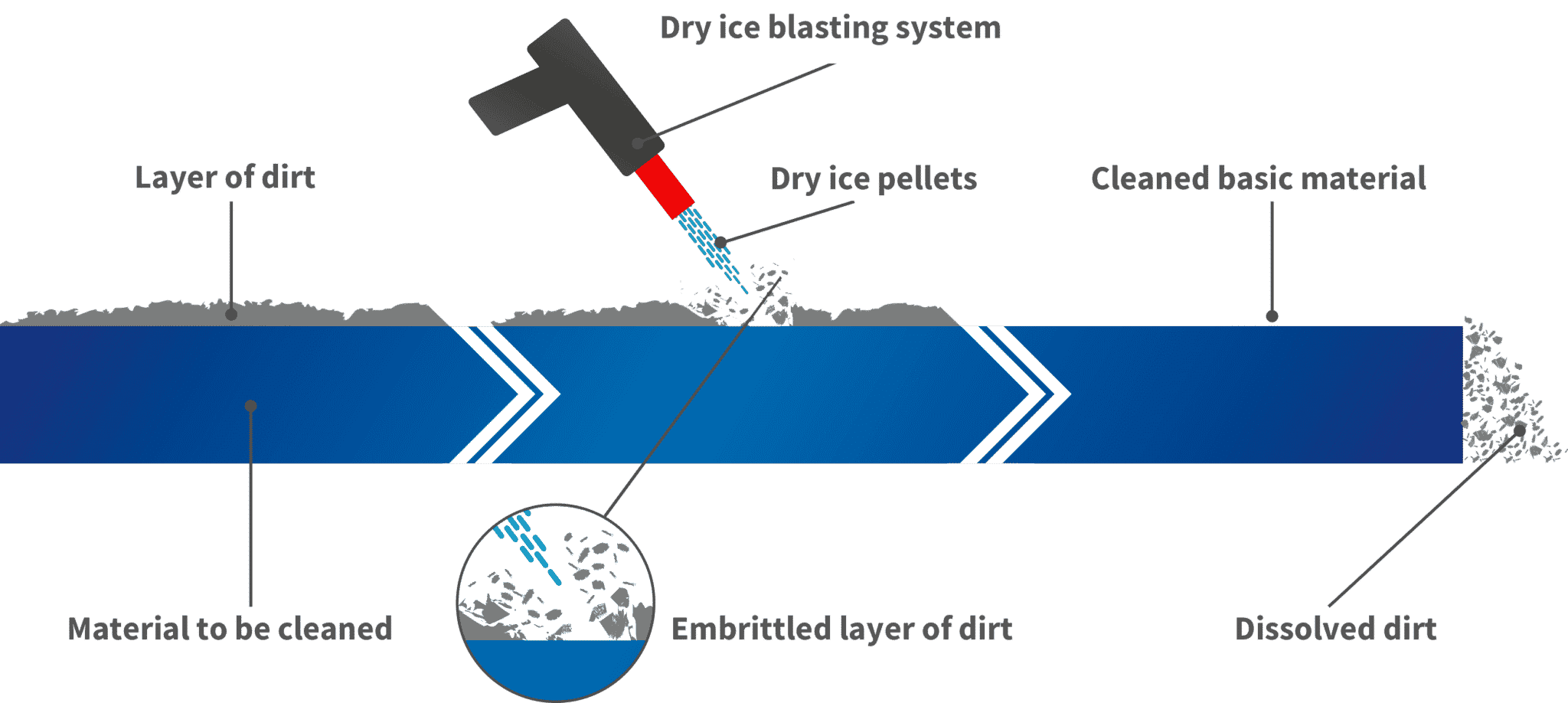


Dry ice cleaning uses dry ice pellets as the blasting medium. With the COOLMASTER®, the pellets are accelerated to high speed using compressed air and blasted through a nozzle onto the surface to be cleaned.
Three effects work together:
01
Kinetic Effect
The dry ice pellets are accelerated by compressed air, giving them kinetic energy. When they hit the contamination, this energy is transferred to the layer of dirt, loosening it from the surface.
At the same time, the second and third effects come into play: the thermal shock and sublimation.
02
Thermal Effect
Dry ice has a temperature of -78.5 °C. Upon impact, it cools the layer of dirt rapidly. The thermal shock causes the contamination to contract and become brittle. Micro-cracks form in the layer of dirt. This weakens its adhesion to the surface.
At the same time, the third effect comes into play: sublimation.
03
Sublimation
Upon impact, the dry ice pellets immediately change from a solid to a gaseous state – they sublimate. Within fractions of a second, the gas expands to around 700 times its original volume.
This rapid expansion within the cracks that have formed acts like a multitude of small micro-explosions. As a result, the contamination breaks apart and is released from the surface.
Since the dry ice completely returns to its original gaseous state, no blasting medium remains on the surface.
Three Effects – One Cleaning Process
Simply explained: The kinetic, thermal and sublimation effects work together during dry ice blasting.
The dry ice pellets are accelerated, hit the contamination at high speed, cool it rapidly and sublimate upon impact. This mechanically and thermally weakens the bond between the contamination and the surface, causing the contamination to be released from the surface.
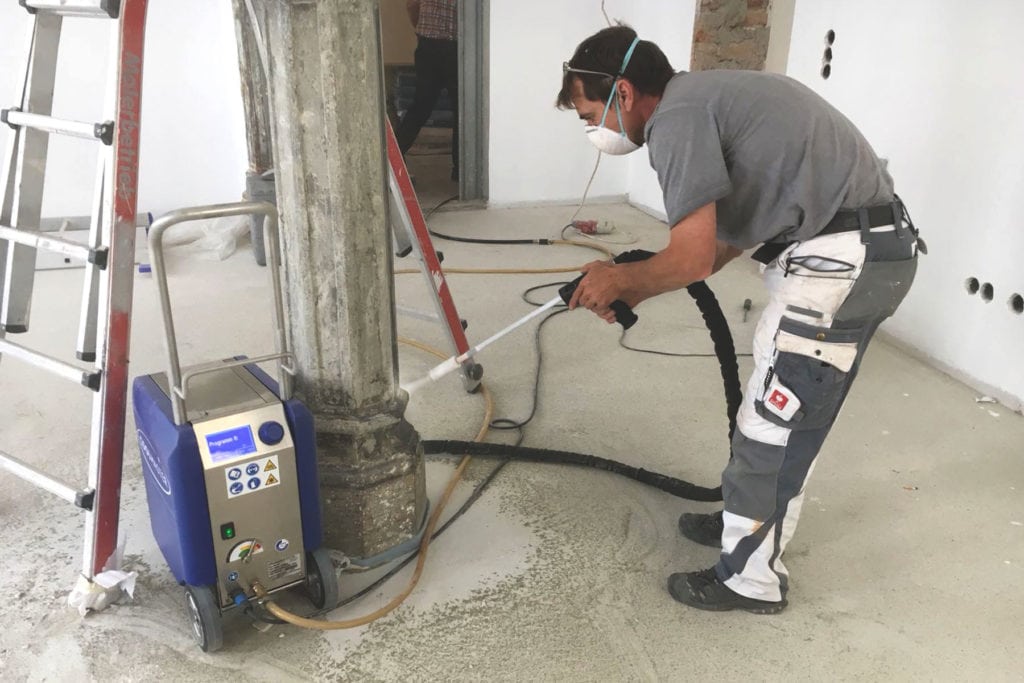
Dry ice cleaning:
Before cleaning:
During cleaning:
After cleaning: